


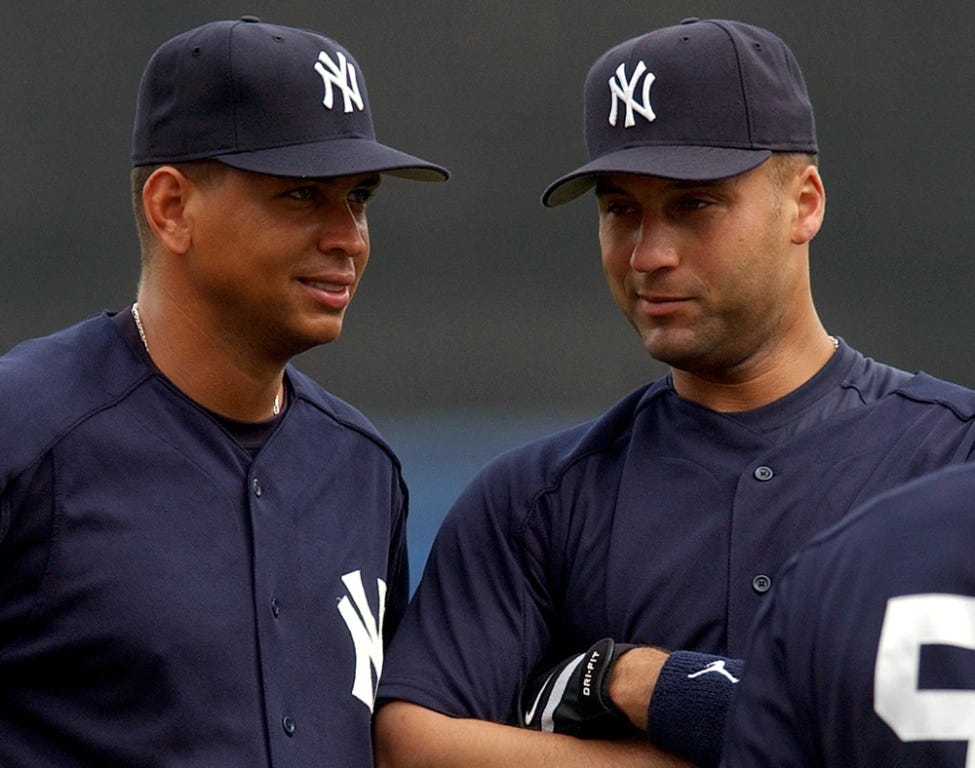
A list of best Yankees tandems at shortstop and third base.
Roger Peckinpaugh and Frank “Home Run” Baker 1916-1919, 1921:
Peckinpaugh the seventh captain in Yankees history at shortstop and Hall of Fame third baseman John Franklin “Home Run” Baker were the first dynamic duo in Yankees history at the left side of the infield when they were tenants of the New York Baseball Giants at the Polo Grounds. It was the dead-ball era so the numbers were night and day to today’s standards and Peckinpaugh drove in 58 runs in 1916 and 72 in 1921; the first of 41 American League championships when the Yankees fell to the Giants in the 1921 World Series. The shortstop led the league at his position in assists in 1916 with 468 then in 1918 and 1919 with 439 and 434 and double plays turned three consecutive years from 1917-1919. Baker tallied 71, 62, 83 and 74 RBIs four consecutive years from 1917-1919 and 1921. Baker missed the 1920 season because his wife died of scarlet fever. He was in the top ten in MLB in home runs 1916-1919 with 10,6,6, and 10 long balls respectively those four seasons (again it’s the dead-ball era it’s like they played on another planet) and led third baseman with put outs (202) and assists (317) in ’17, put outs in ’18 and ’19, as well as double plays turned by a third baseman in 1918 (33) and 1919 (27) and fielding percentage (.972).
Joe Dugan and Mark Koenig 1925-1928:
“Jumping Joe” at third and Mark Koenig at short was an integral part of the Murderer’s Row dynasty in the late 20’s which dispensed three consecutive pennants and back-to-back World Series championships including the greatest team of all time in 1927. Koenig drove in over 60 runs for three straight years and batted .319 in 1928 while batting .500 in the 1927 World Series going nine for eighteen. Dugan tallied 61 RBIs and batted .288 in 1926 and .333 in the World Series that year.
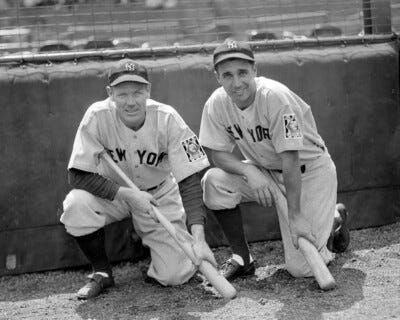
Red Rolfe and Frank Crosetti 1935-1940:
Rolfe manning position number five and Crosetti operating position number six won four consecutive World Series with Joe McCarthy at the helm from 1936-1939. Rolfe was an All -Star from ’37-’40, drove in 80 runs in ’38 and ’39, batted over .300 ’35,’36,’38, and ’39 and led the league in triples in 1936 with fifteen and in doubles, hits, and runs scored in 1939. While dominating with the glove leading AL third baseman in fielding percentage at .964 then .957 in 1935 and 1936. Crosetti was an All-Star in 1936 with fifteen homers, 78 RBIs, and a .288 batting average then made the AL team for the Midsummer Classic again in 1939 and tallied a league high 27 stolen bases in 1938. Crosetti led AL shortstops in 1939 with a .968 fielding percentage.
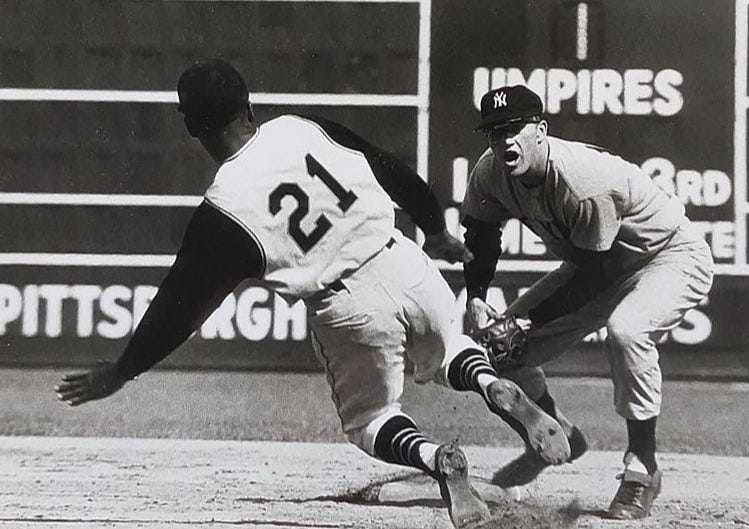
Tony Kubek and Clete Boyer 1960-1965:
Kubek and Boyer right to left in the infield consisted of five consecutive AL pennants and back-to-back World Series victories in 1961 and 1962. Known more as glove guys not too dominant at the plate Kubek was an All-Star in 1961 and batted .333 in the seven game World Series loss to Pittsburgh and Boyer batted .318 in the seven game World Series win over the Giants in 1962. Boyer led American Leaguers at the hot corner in assists in ‘61 and in ’62 in putouts, assists, and double plays turned, as well as assists and DP’s turned in ’65.
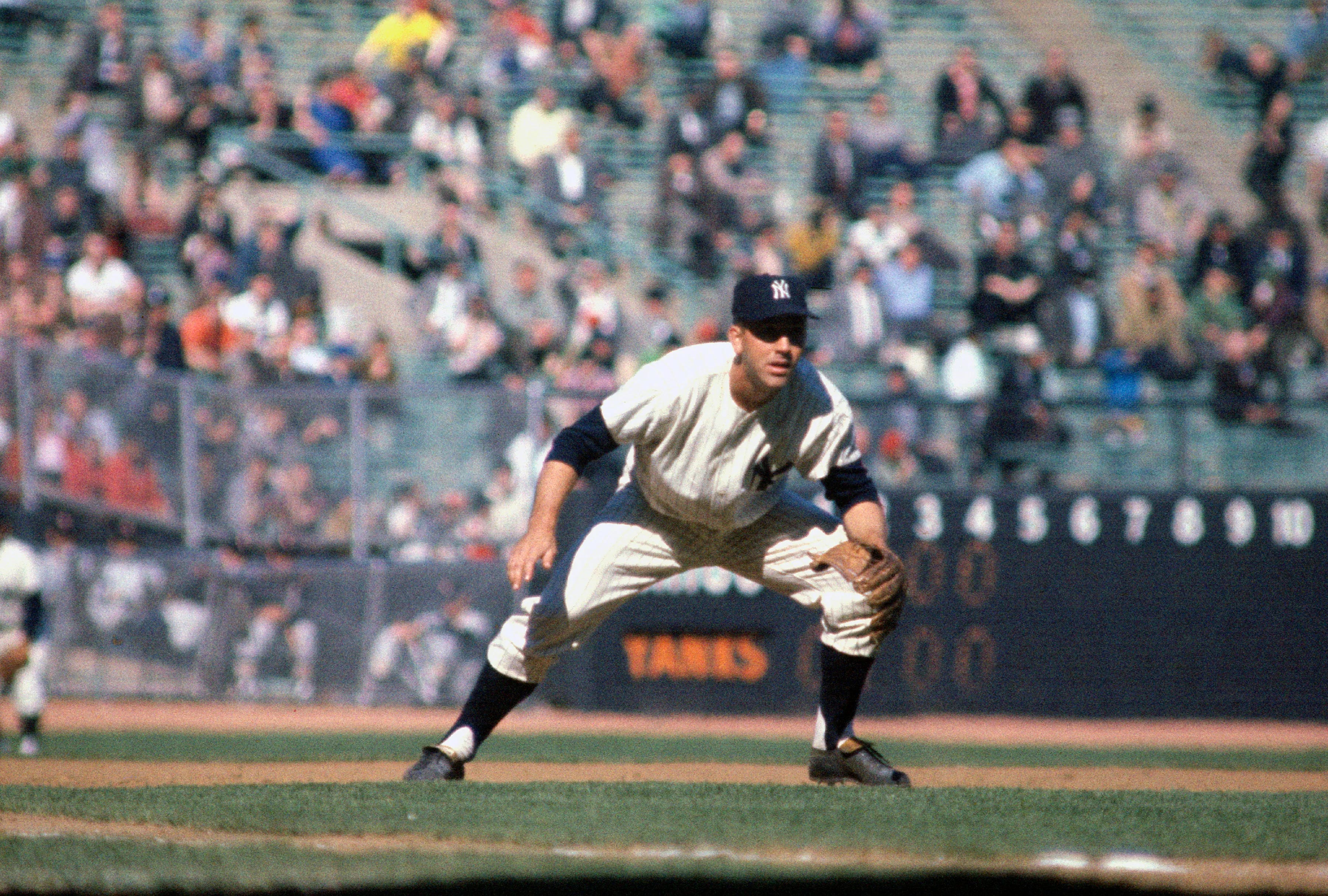
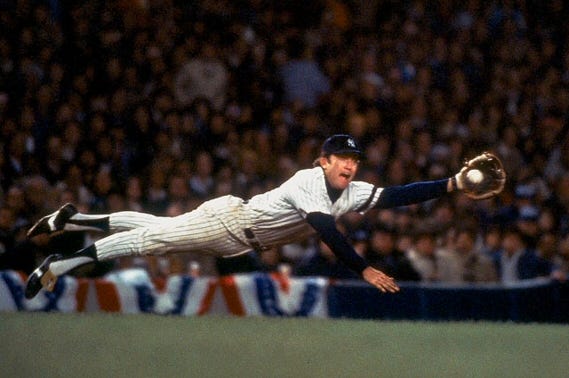
Graig Nettles and Bucky Dent 1977-1982:
Graig Nettles was a magician at the hot corner. A Gold Glove winner in both World Series seasons in 1977 and 1978 and was an All-Star four consecutive years from ’77-’80. The first World Series year slapped 37 round trippers and 107 RBIs and finished fifth in MVP voting with 5.5 wins above replacement (WAR). In the epic comeback season in 1978 hit 27 long balls and drove in 93 runs, finished sixth in MVP voting, 5.7 WAR, led AL third basemen with 30 double plays turned and registered a .975 fielding percentage. In the 1978 ALCS vs. Kansas City batted .333 going five for fifteen, amassed MVP merits in the 1981 ALCS batting .500 (six for twelve) a homer and nine runs driven in vs. Oakland, and .400 (four for ten) in the 1981 World Series loss to the Dodgers. Bucky Dent was an All-Star in 1980 and 1981 leading the league in fielding percentage in 1980 (.982). Lives forever in Yankee lore for his 3-run home run over the monster at Fenway in 1978 that helped complete the astonishing comeback and achieved the MVP award of the ’78 World Series batting .417 (10 for 24), with seven RBIs in a six-game triumph over the Dodgers.
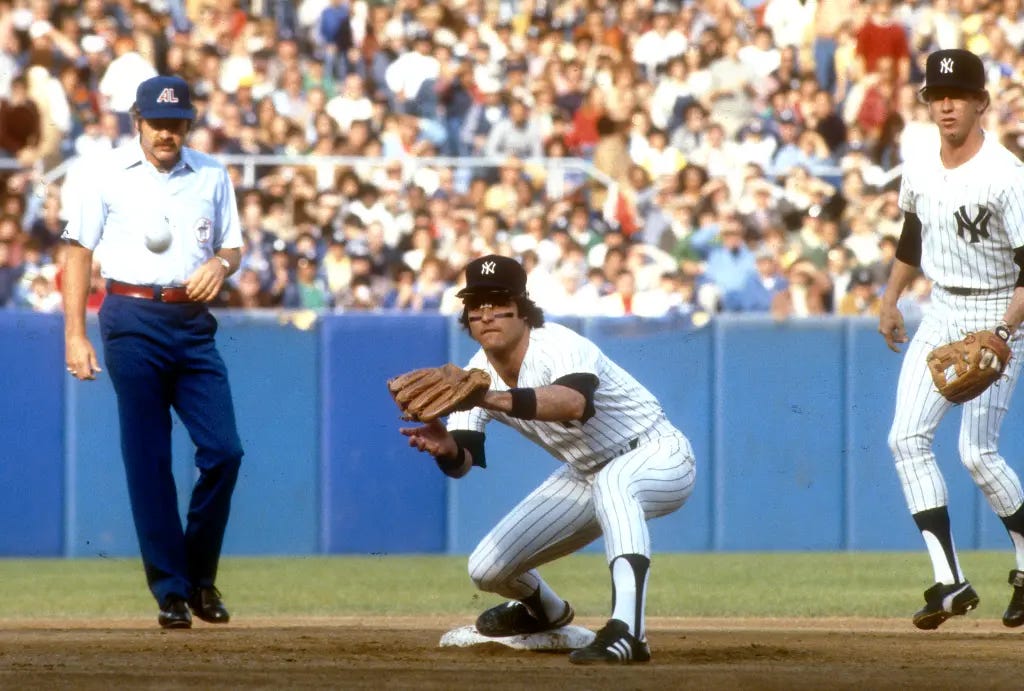
Derek Jeter and Wade Boggs 1996:
They were only together for an entire season once but it’s a Hall of Fame tandem. Jeter won Rookie of the Year honors in the year a dynasty was born with a .314 batting average, 78 RBIs, and ten homers and batted .412 in the Division Series and .417 in the LCS with a home run; one that was attributed much by the help of Jeffrey Maier. Boggs batted .311 and made the All-Star team. The 5-time batting champ and lifetime .328 hitter finally garnered his World Series championship that he failed to obtain a decade prior in Boston then took a victory jog on horseback rejoicing in the first Yankees title in eighteen years while a Hall of Fame shortstop’s indelible career was only beginning.
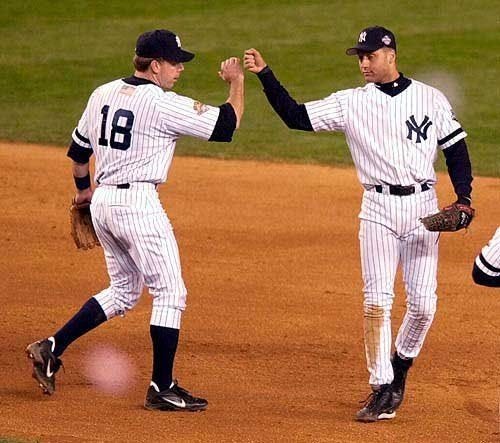
Derek Jeter and Scott Brosius 1998-2001:
American League champs in all four years with a WS 3-peat including two World Series MVPs. In all four seasons The Captain made the All-Star team and batted over .300. During those four Octobers slammed six home runs and twenty RBIs while garnishing the World Series MVP in the 2000 Subway Series victory in five games over the Mets as #2 hit two homers, two doubles, and two RBIs and nine hits with a .409 batting average. Scott Brosius was a 1998 All-Star with a team that won 125 games summating nineteen home runs, 98 RBIs, and a .300 batting average and won the ’98 WS MVP lacing two home runs, six runs batted in, and batted .471 in a four-game sweep over the Padres while hitting a grand slam in game one. He won a Gold Glove in 1999 leading his position in fielding percentage (.962). Both had huge home runs in two otherworldly games in the 2001 World Series in mystique fashion and Jeter saved the season in the Division Series in Oakland coming out of nowhere with an awe-inspiring shovel pass to prevent a run known as “The Flip.”
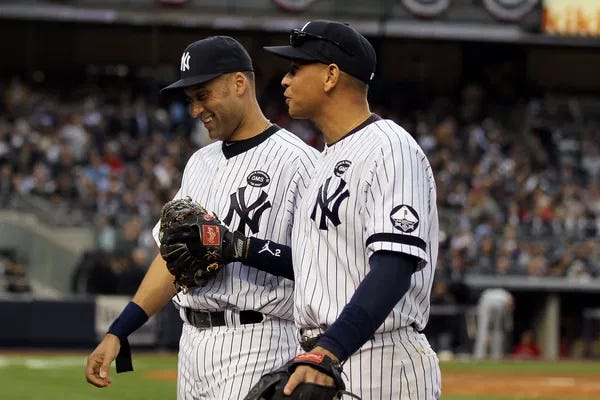
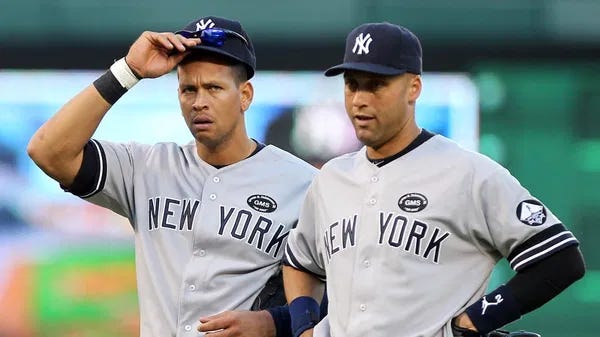
Alex Rodriguez and Derek Jeter 2004-2013:
This duet of frenemies is the most formidable left side of the infield in Yankees history hands down. Jeter’s arguably best season was when he was snubbed of the AL MVP in 2006 when he launched fourteen dingers, drove in 97 runs, and batted .343. The runner up won a Gold Glove in ‘06 as he tallied five in his career. Also in 2004, 2005, 2009, and 2010. Mr. November led shortstops in fielding percentage in 2009 (.986) and in 2010 (.989). A-Rod summated over 100 RBIs and 30 home runs in his first seven seasons in pinstripes from ’04-’10. In his MVP season in 2005 led the league in home runs (48), runs (124), WAR (9.4), slugging percentage, OPS, and OPS+ and in another MVP season two years later led the league in all those categories again with 54 round trippers, 143 runs, 9.4 WAR, and led the AL in RBIs with 156 in 2007. Rodriguez had a marvelous 2009 postseason that culminated with their 27th World Championship with six home runs, eighteen RBIs, batted .365, with a .500 on base percentage, and slugged .808 and it’s a disgrace to baseball that Rodriguez is not in the Hall of Fame. Jeter added to his illustrious postseason resume driving in six runs, smashing three dingers, and batted .344 while registering a .407 batting average with eleven hits in the victory over the Phillies in six games.

Jordan Stankovich
My name is Jordan Stankovich. I am a journalist on Long Island. I have been in the journalism field for 5 years. I am a sports reporter for the Suffolk County News, the Long Island Advance, the Islip Bulletin, and the Tide of Moriches and Manorville. Beat writer for the Suffolk County Stingrays minor league basketball team in the ABA. On substack I cover current topics about the pro New York teams and sports history. I have an avid passion for sports history and statistics.

0 Comments